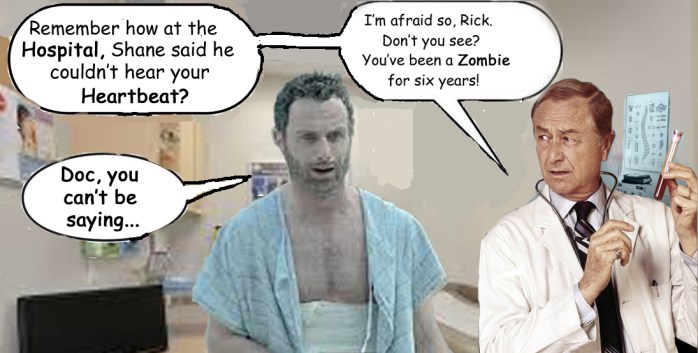
With the eagerly anticipated Season 7 of The Walking Dead set to air October 23, and fan theories running wild, I thought I’d have a bit of fun myself. Submitted for your approval, a final episode revelation that Twilight Zone creator Rod Serling might have written: It turns out hero zombie-fighter Rick Grimes died for a few seconds while in the hospital and returned, unknowingly, as a zombie himself. (His brain function relatively undiminished, naturally, since he was out so briefly).
NO HEARTBEAT, NO PROBLEM: Rick’s partner Shane made absolutely sure he heard no heartbeat before abandoning his comatose pal.
This, of course, isn’t the first twist ending that lovers of the show have proposed. Multiple people have theorized that the entire series has been a nightmare and Rick is still in a coma. The notion circulated so widely on the Internet, that the show (and graphic novel) creator Robert Kirkman came forward to deny it. Still hope for Jim of 28 Days Later, I suppose. (That zombie stomper was, coincidentally, also in a coma when the zombie apocalypse broke out).
Memes like these flooded the Internet, but the show’s creator shot the rumor down like it was a roaming walker.
It would’ve made a nifty twist. But Serling probably would give the series finale one extra twist, in a scene like this:
Rick, his wife Lori, former partner Shane, and son Carl hover over his hospital bed as he emerges from his coma.
RICK: It was awful. I dreamt the whole country was overrun with zombies. SHANE: It’s OK, old buddy. You’re back with us in the real world now. CARL (Whispers): Mom, do you think we ought to tell him about the vampires? LORI: Wait till he’s had time to rest, dear.
An even bigger bummer of an ending would be if it turned out that Rick, a sheriff’s deputy, was actually shot DEAD in the first episode, and even being in a coma was all in his imagination! In this scenario, in the final scene, Rick is surrounded by walkers, with no hope of escape. One elderly zombie emerges from the herd and approaches him.
RICK: You won’t get me, you bastards! HEAD ZOMBIE: There’s no reason to be afraid. Don’t you see, Rick? You’re already dead. We all are.
As Rick’s panic subsides, he now sees the “zombies” as ordinary citizens who gather around to greet him.
ZOMBIE MAIL CARRIER: I thought he’d NEVER stop running from us, Pete. RICK: B-But who are you? HEAD ZOMBIE: Pete is fine. But gosh darn it, if some folks don’t still insist on calling me St. Peter.
Such a “dead and doesn’t know it” ending would bring the saga full circle. It was the twist in Carnival of Souls, the creepy 1962 B&W film that inspired George Romero to make Night of the Living Dead.
When you board a bus and your fellow passengers look like these commuters in “Carnival of Souls,” it may be an early warning sign that you are dead.
Years ago, in college, I was midway through the book Sherlock Holmes vs. Dracula by Loren D. Estleman, when I enthusiastically told my roommate I was reading a novel about the pair butting heads.
“So am I,” he marveled, holding up his dog-eared paperback copy of The Holmes-Dracula Files by Fred Saberhagen. Two books on the same theme, by authors who took the premise in entirely different directions. It turns out the great detective has had multiple literary run-ins with the Lord of Darkness over the years. A clash of the contemporaries was inevitable. They are the two most enduring characters in fiction – one the epitome of Victorian rationality, the other the embodiment of its dark, sensual counterpart.
Purists object to any Holmes tale involving the supernatural, but the possibility of the hero venturing off his usual turf appeals to me. And the more, the merrier. I’d love to see a three-way mashup, where Sherlock and Tarzan team up to battle Dracula in Africa!
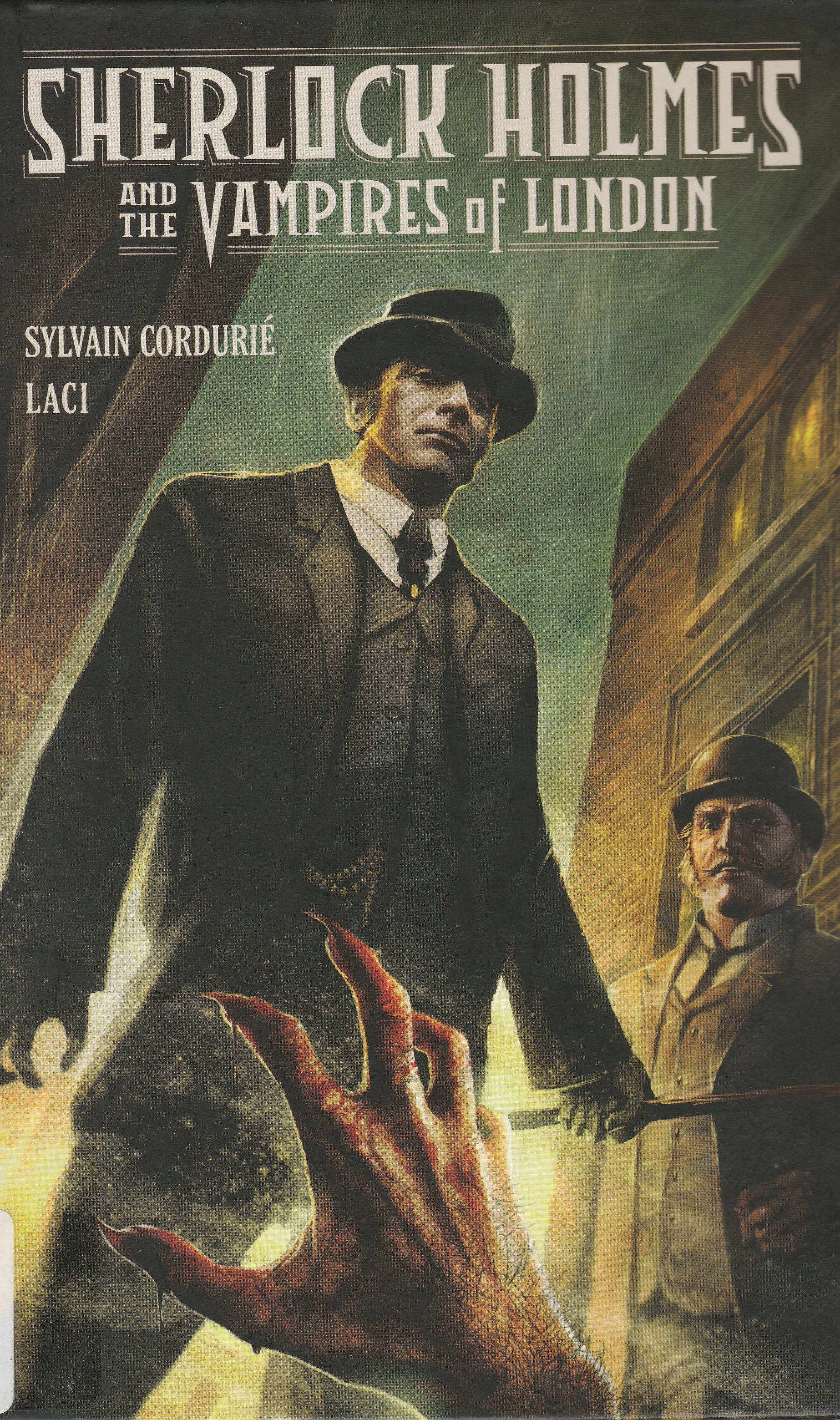
Dracula does not make an appearance in the entertaining graphic novel Sherlock Holmes and the Vampires of London, but the sleuth does face some equally implacable foes, principally the aristocratic vampire Lord Selymes.
UPPERCRUST VAMPIRE Lord Selymes is the perfect host.
The story is set in 1891, during Sherlock’s hiatus after his supposed death fighting Professor Moriarty at Reichenbach Falls. A rogue vampire has been viciously murdering prominent Englishman, for reasons unknown. Selymes, with the help of his legion of bloodsucking minions, coerces a reluctant Holmes into tracking the fiend down. The “stakes” are high. If the killing spree doesn’t stop, Queen Victoria – who tolerates vampires in her realm – will have no choice but to order their extermination.
The writer Sylvain Cordurie is faithful to Conan Doyle, when it comes to Holmes’ personality and methods. The detective relies on his powerful intellect to defeat his undead foes. In one clever move, he imbibes holy water to dispatch a vampire who makes the mistake of biting him. The detective’s expertise in chemistry also plays a critical role in the story.
BOTTOMS UP: Holmes uses his brain to get the better of a bloodsucker.
Watson, as yet unaware that Holmes is alive, is not aboard for this adventure. The story is told as a memoir Holmes writes to his friend. The doctor’s absence is sorely felt; now I understand why Conan Doyle gave his cerebral hero a companion to begin with. Holmes, true to form, is emotionally detached throughout, whereas Watson’s reactions – terror, revulsion, disbelief – would have added another dimension to the tale. As it is, the book has a somewhat dispassionate tone. In fact, the writer doesn’t even include a moment in which the logical Holmes is shocked to learn of the existence of vampires. He’s pretty “sanguine” about the blood-drinkers, pardon the pun.
Irene Adler, the woman Sherlock became smitten with in A Scandal in Bohemia, does appear in vampire form – or rather her lookalike appears. You see, the real Irene apparently died two years earlier. Oh, I know what you’re thinking. SPOILER ALERT: The vampire is not Irene. The writer missed a golden opportunity here to offer Holmes an irresistible temptation.
Sherlock’s only love interest IRENE ADLER is back — or is she?
The artist Laci does a crackerjack job depicting fog-enshrouded 19th century London, with attention to details of architecture and costume. Colorist Alex Gonzalbo’s use of a limited palette contributes to the grim atmosphere. I wasn’t crazy about how Holmes was drawn, however. His facial expression rarely changes, and while we know he is coldly logical, we want human reactions at critical points. I was also disappointed that Irene’s double is not more alluring. Irene had sex appeal to spare – shouldn’t a vampire version be more vampy?
I also have a beef with the dimensions. The book was originally published in France at 12.5 x 9 inches, but the U.S. version put out by Dark Horse is reduced to a stingy 10 ½ x 7 inches. The panels look cramped, and some of the drama and beauty of the art is lost. I would have enjoyed the reading experience more in a larger format.
All in all, though, two fangs up for a book that fans of Sherlock Holmes and/or vampires will enjoy
And written by this reviewer:
THRILLING NEW GRAPHIC NOVEL!
Vampires run amok in a women’s prison in the gorgeously illustrated, 80-page graphic novel Night Cage. When a newly made vampire is sentenced to an escape-proof, underground slammer, she quickly begins to spread the contagion.
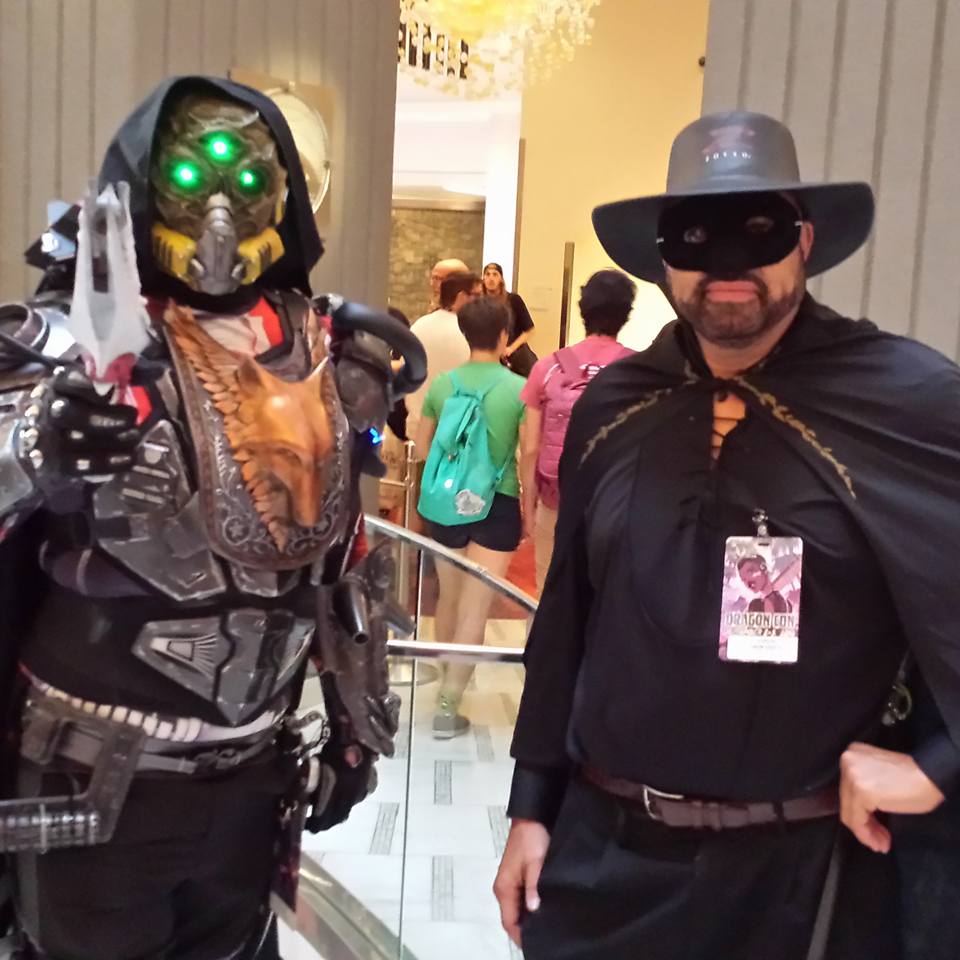
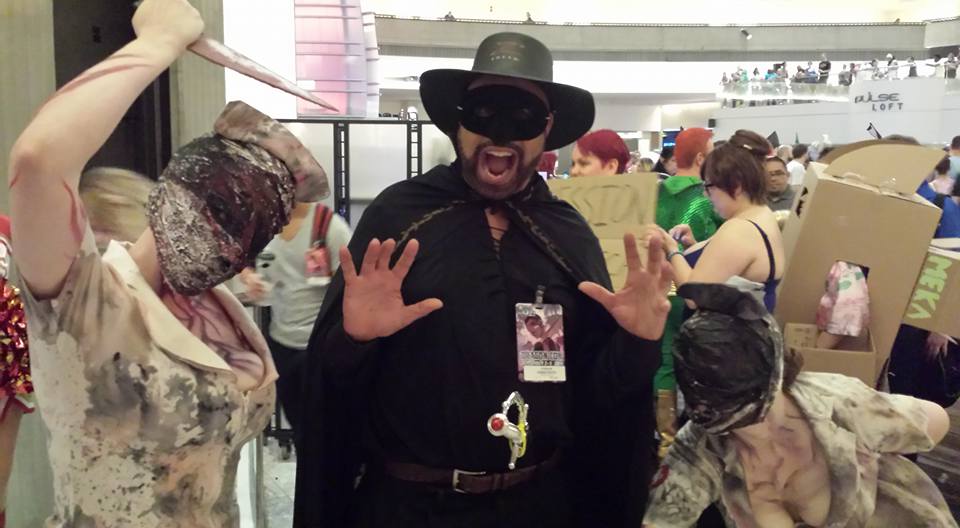
For the first time, last weekend I attended Dragon Con, the nation’s premier science fiction and fantasy convention, in costume – decked out in a Zorro outfit. Posing with other attendees in wild getups was fun, but the highlight was getting to see two of my favorite genre stars in the flesh.
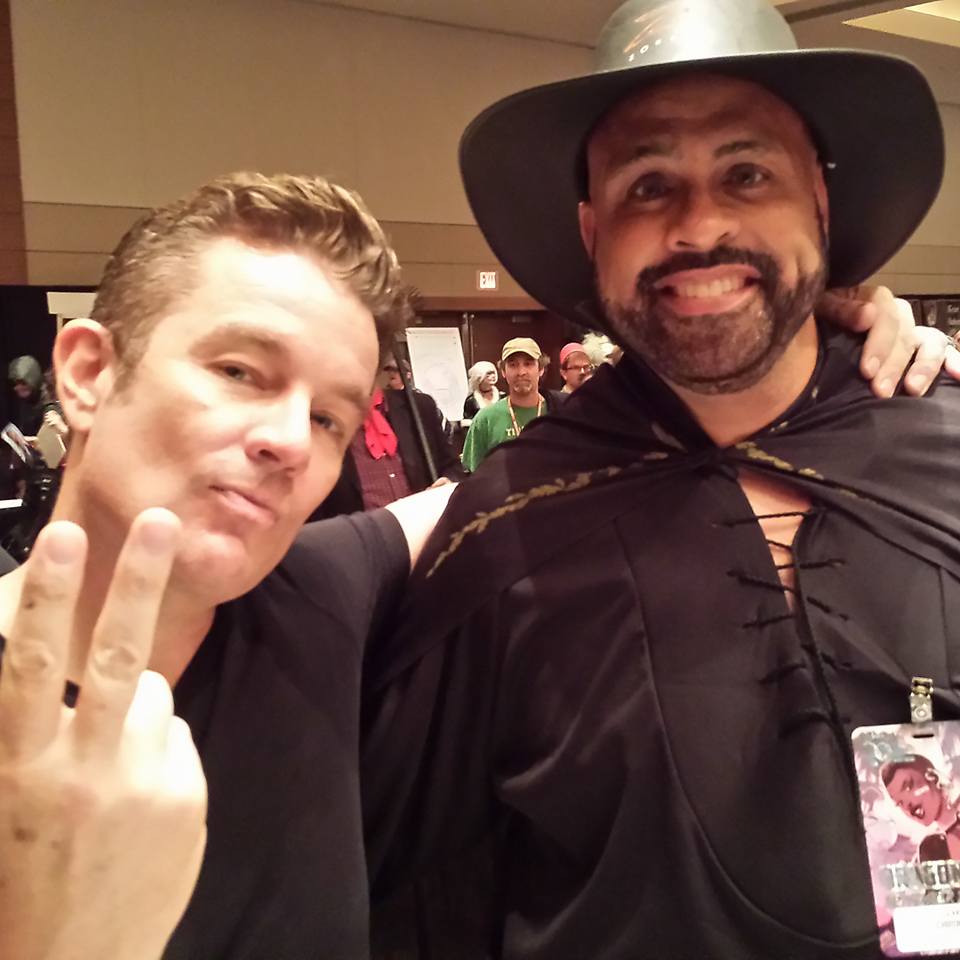
I never before paid for a photo with the former star of a TV series. Not only did it seem like clingy celebrity worship — plus a waste of money — I always felt embarrassed for fading screen idols reduced to scraping by on $20 a pop. But when I spotted James Marsters, who played bleached blond cockney vampire Spike in Buffy the Vampire Slayer, I couldn’t resist. Not because I especially wanted a memento, but just for the opportunity to tell him face-to-face what a smashing job he did on the show. As I told the actor, he took viewers on a wonderful journey, deftly pulling off comedy, drama – even singing in the famous musical episode.
Marsters gave my Zorro costume a thumbs up.
Marsters modestly responded that the writers “gave me such wonderful stuff to work with.” Which is certainly true. The arc of the character, who goes from villainous Billy Idol from hell to love-struck romantic hero, was one of the best ever written for the tube. Still a consummate actor, Marsters managed to make every fan on line feel like they shared a “moment” with him. (He complimented me on my “cool costume.”) Some of his legion of female admirers may have been a bit disappointed, though. A card on the table politely informed them that there should be no requests for “kissing, hugging or biting.”
Thousands packed a ballroom to hear TV legend William Shatner.
Later, in a giant ballroom filled to capacity, I got to see my boyhood hero Captain Kirk himself speak. Bouncing around the stage buoyantly, the actor’s energy and mental agility belied his 85 years. It was a striking – and welcome – contrast to the classic Star Trek episode “The Deadly Years,” in which a mysterious disease causes Kirk to age rapidly, and he goes senile!
Aging decades in just hours, Kirk shows signs of dementia.
A voracious reader, who chatted excitedly about the latest book he’d read on the intelligence of birds, Shatner proved himself far from the vapid egotist some see him as (an image spoofed hilariously by Tim Allen in the movie Galaxy Quest.) Shatner got deep as he recounted his discussion with astrophysicist Stephen Hawking for a science documentary. Surprisingly, when given an opportunity to ask Shatner a question, the genius posed the same superficial one any elementary school kid would: What was your favorite episode? The truth, the actor admitted, was that he recalls few details from the show in which he appeared 50 years ago.
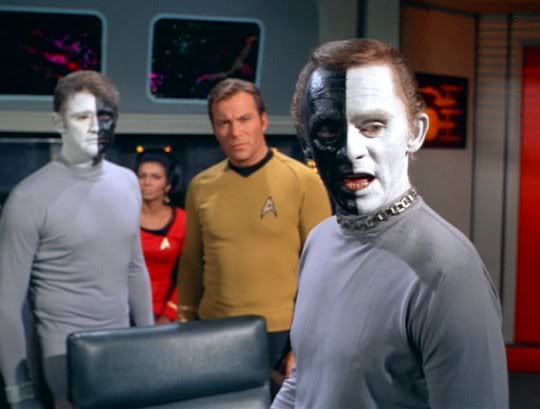
In an episode titled “Let That Be Your Last Battleground,” race hatred destroys a civilization — and even Kirk can’t fix it.
“I barely remember what hotel I woke up in this morning,” he joked. The star did say that in general what intrigued him were the episodes built around “big ideas.” In particular, he cited the one featuring a pair of aliens from the same planet, who hate each other because one is white on the right side and black on the left, the other just the reverse. Even when I watched it as a kid, the message about racial tolerance seemed heavy handed. The duo hail from “the southern part of the galaxy,” Spock informed the captain. But I guess in the 1960s, when TV’s first interracial kiss was shocking to viewers, you had to pound people over the head.
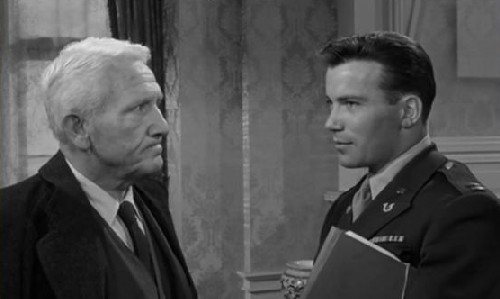
Playing a young Army officer, Shatner helps Spencer Tracy prosecute Nazi leaders in Judgment at Nuremberg.
Asked about his experience as a young actor in Judgment in Nuremberg (1961), he recalled how the director sat the cast down and screened for them death camp footage of corpses being mowed into a trench by a bulldozer. He still wonders how humans can be capable of such bestial behavior, yet also incredible nobility and self-sacrifice. (That duality was, of course, the subject of another memorable episode, in which Kirk is split into a good half and evil half, due to a transporter malfunction.)
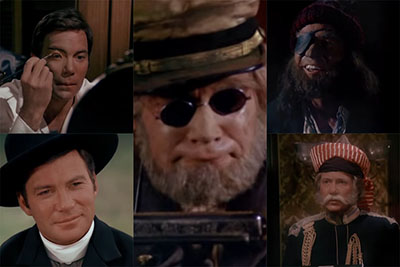
Bill played a master of disguise on TV’s short-lived Barbary Coast.
But the former starship skipper was mostly funny. Asked about the short-lived 1975 series The Barbary Coast, in which he played a master of disguise, he reenacted the grueling experience of being made up as three different characters every day, often with elaborate prosthetics. It was such a pain in the butt that even though it was his first gig on the air since Star Trek ended nearly a decade earlier, “When it was cancelled after 13 weeks, I was glad!”
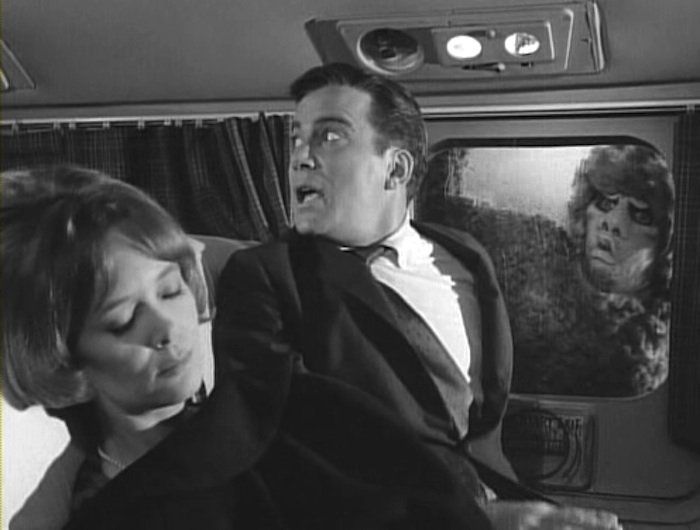
“Stewardess!” Bill finds the skies not so friendly in this classic Twilight Zone episode.
In a famous Twilight Zone episode “Nightmare at 20,000 Feet,” Shatner played an airline passenger recovering from a nervous breakdown, who keeps spotting a gremlin on the wing. He frantically tries to alert the flight crew, but naturally no one believes him. The TV legend revealed that when he flew with his children, they invariably made him prank stewardesses. They’d buzz for one, and when she came over, he’d turn from the window, making “the face.”
Mock Shatner for “overacting,” all you want. I maintain he’s way underrated. As is often the case with good performances, it seems like the actor is simply playing himself. But before being cast as the swaggering, self-assured, macho Kirk, he was best known for portraying weak or neurotic characters like the one described above. He wasn’t typecast. What holds up best, as you watch the original series today, are those mind-blowing ideas, and Shatner’s performance. As he once said in an interview, he’s always been a storyteller, and you can see him reinforce the plot, note by note in each scene, with his acting choices. Experiencing what a splendid raconteur he is was a great reminder of this.
Still, I’m not above poking fun at Shatner’s acting style, as anyone knows who’s seen my impression.
Below are some more of my favorite Dragon Con moments:
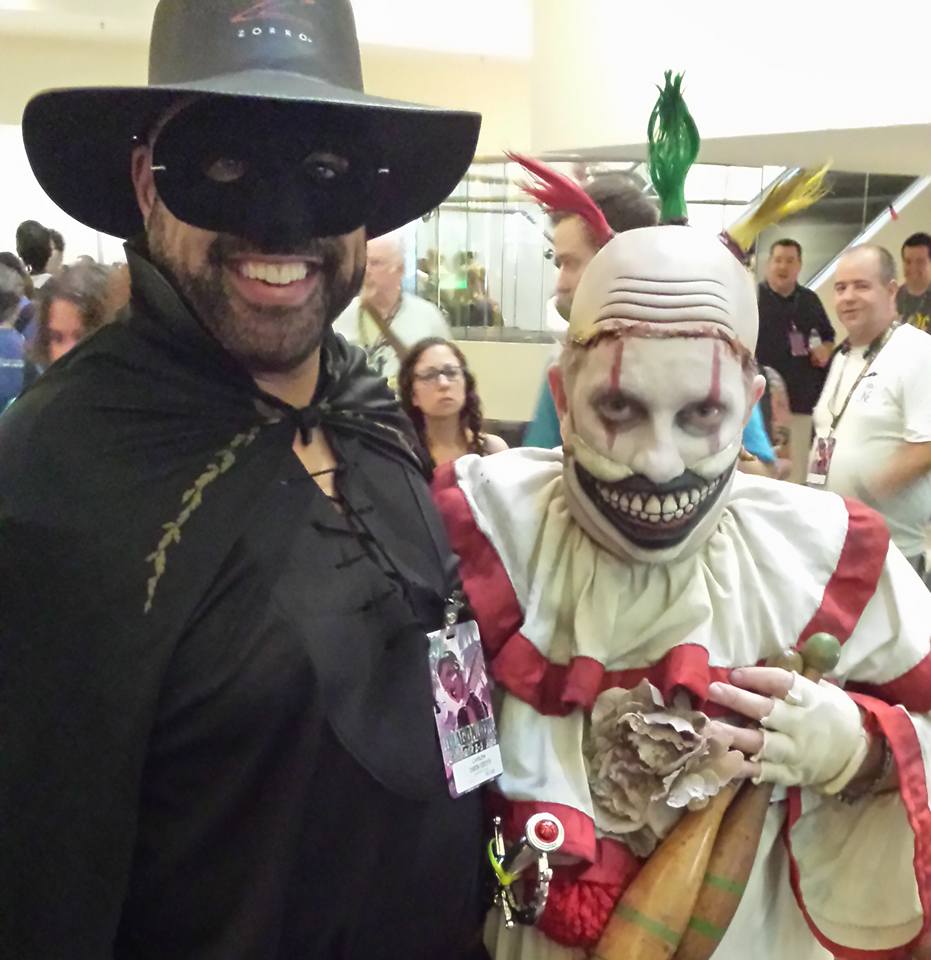
Plenty of time to clown around at the convention.
Cute and creepy, you’ve got to hand it to her.
The convention was heavily populated by Harley Quinns, like this one in the parade.
This Harley didn’t really put much effort into makeup — but who cares?
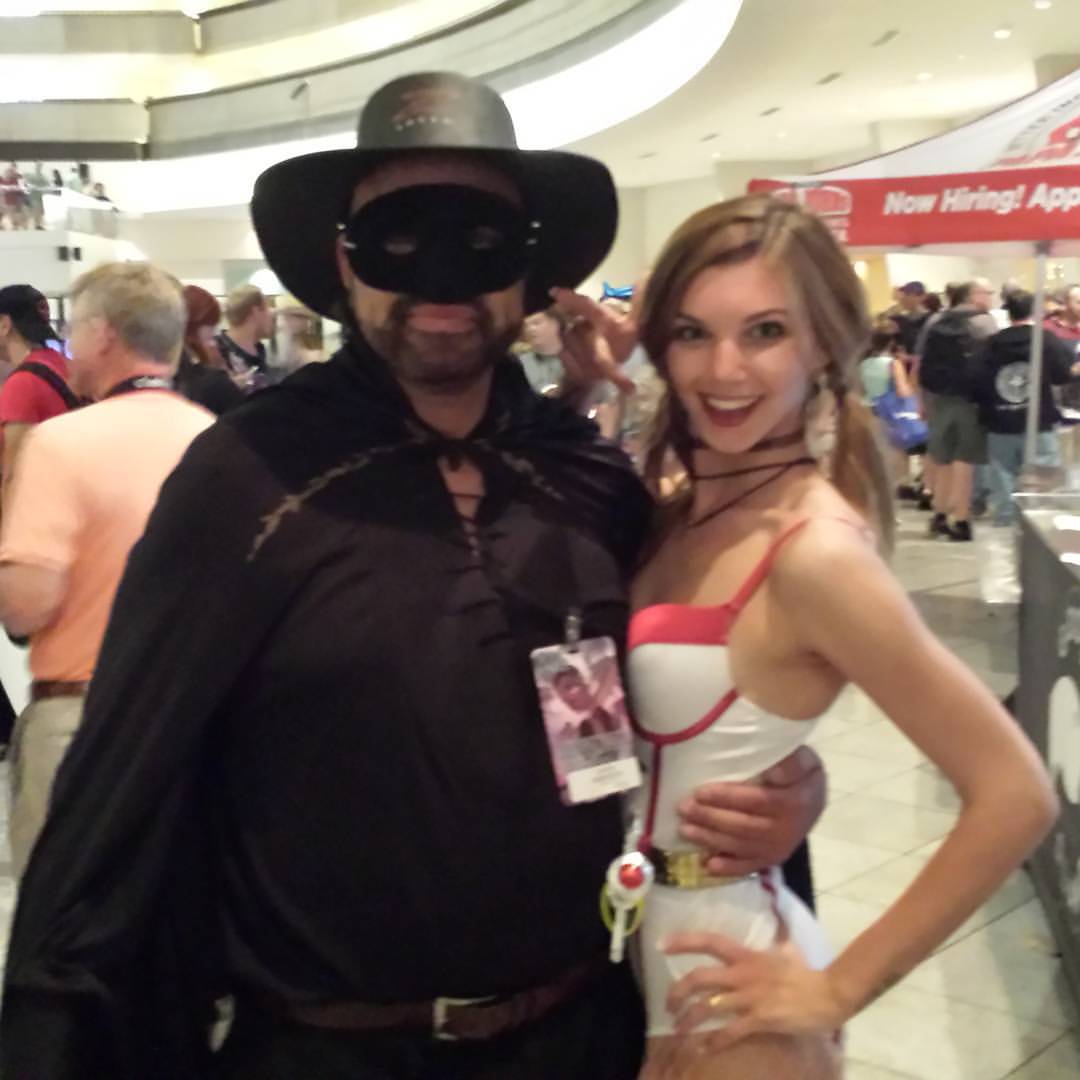
Not every female attendee at Dragon Con found me irresistible.
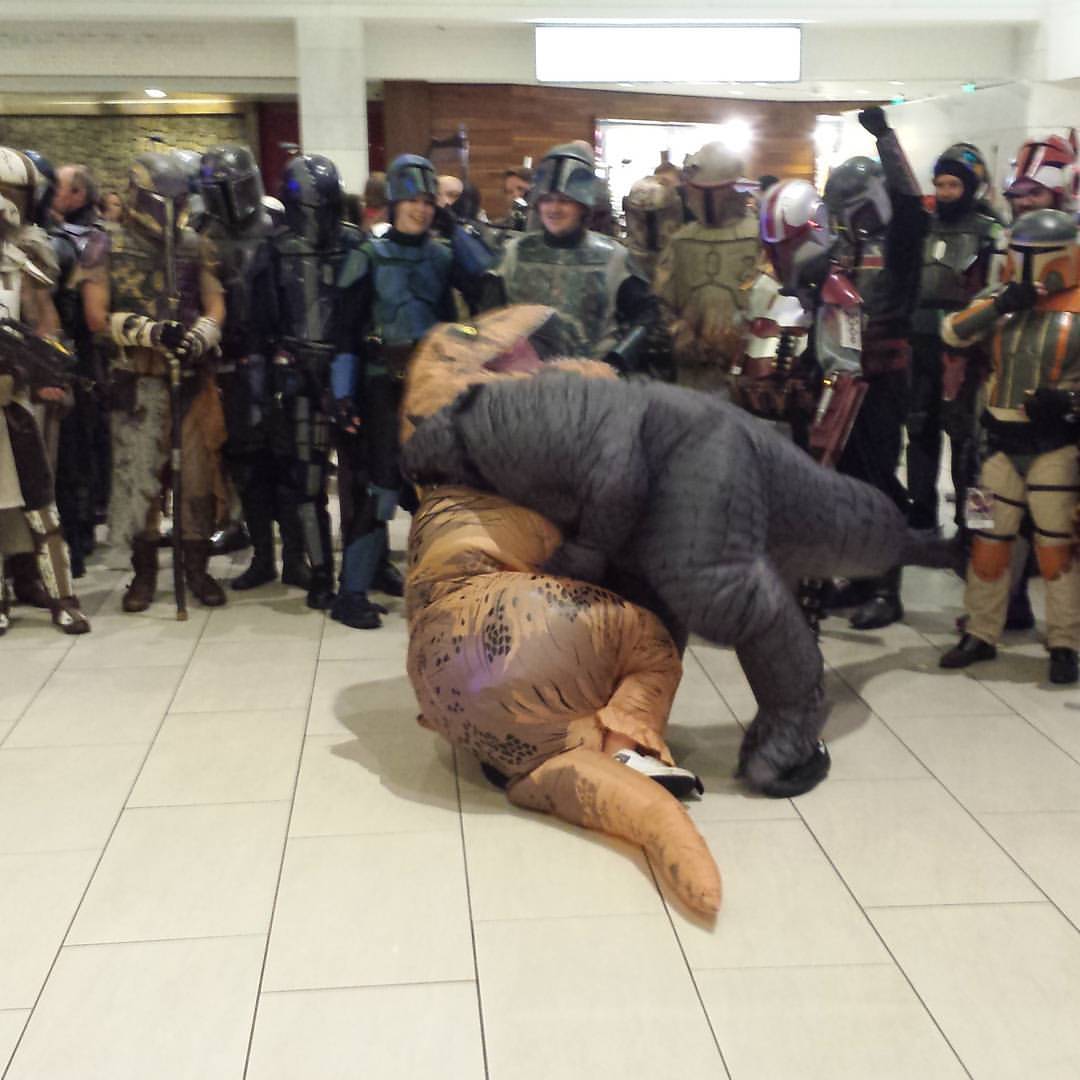
The highlight of the convention for my son was this brawl between Godzilla and a T-rex, cheered on by Star Wars bounty hunters.
As usual, oodles of scantily clad ladies roamed the convention.
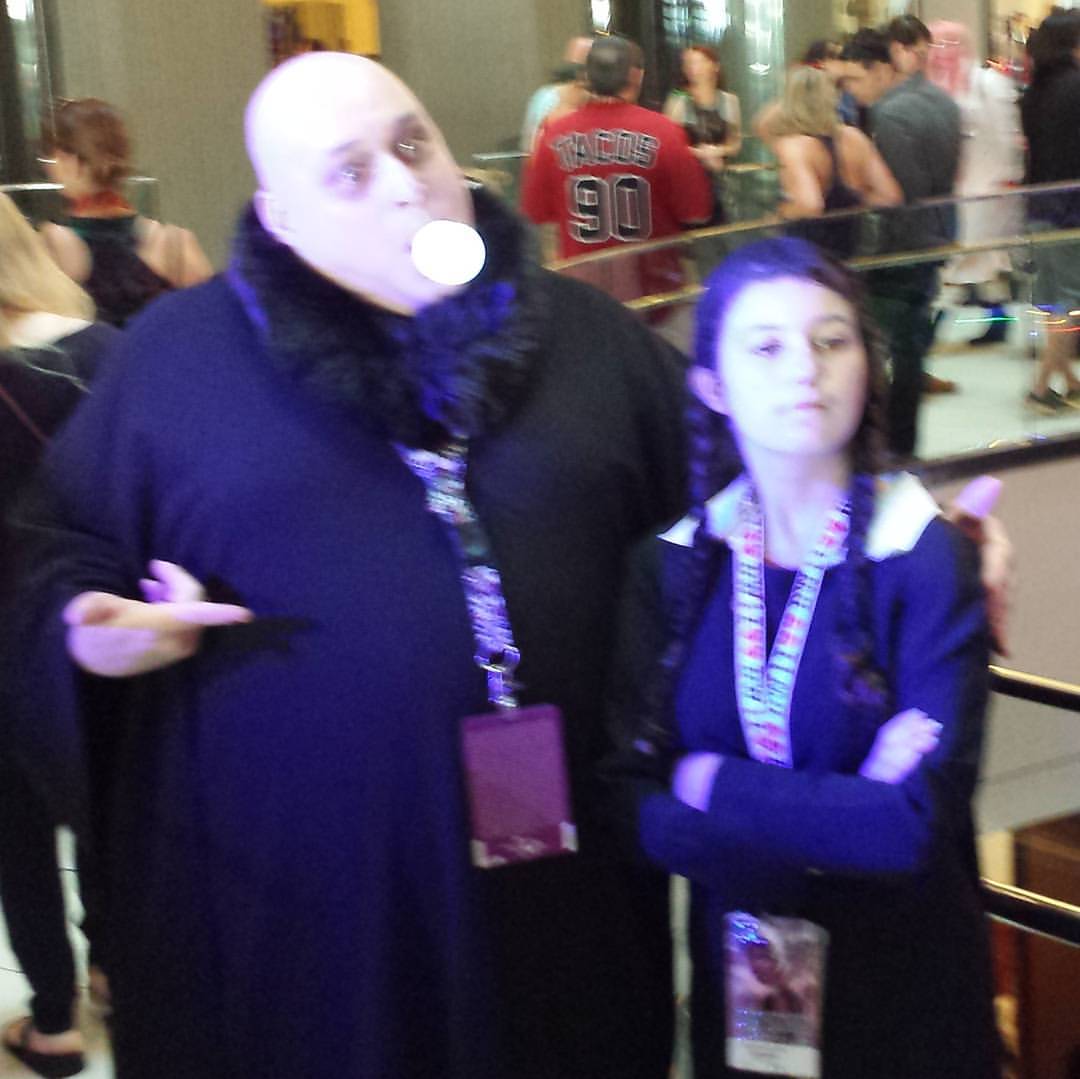
Bright idea for costumes: Uncle Fester and Wednesday.
A formidable alien warrior — except maybe for his weapon.
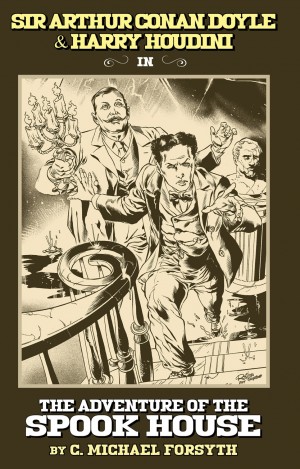
C. Michael Forsyth is the author of "Sir Arthur Conan Doyle & Harry Houdini in The Adventure of the Spook House,""The Blood of Titans," "Hour of the Beast" and "The Identity Thief." He is a Yale graduate and former senior writer for The Weekly World News












 Horror News