Two of the most extraordinary men who ever lived clash in the thrilling novel Houdini vs. Rasputin, set in Tsarist Russia. While performing before Tsar Nicholas II, the world’s greatest escape artist Harry Houdini becomes pitted against a formidable foe: Rasputin, the powerful and sinister mystic. Rasputin has made puppets of the Tsar and his wife Alexandra. To save the nation from ruin, a small band of patriots recruits Houdini to expose the imperial “spiritual advisor” as a charlatan. Houdini wages an epic battle of wits and wills with the charismatic fiend.
The American magician’s daring and ingenuity are put to the test in an adventure that takes him from the grand palaces of St. Petersburg to the frigid wastelands of Siberia. Along the way, Houdini makes allies and enemies of a host of real-life figures, including the mischievous imp Princess Anastasia, the colossal former boxer and royal bodyguard Jim Hercules and the Black Sisters, practitioners of the occult who scheme to use Rasputin for their own ends. Meticulous research brings these people and the Russia of the early 1900s to life.
Rasputin with his bevy of fanatical female followersl.
Rasputin is one of history’s most fascinating villains, at once a barely literate Siberian peasant and a Nietzschean superman, a Christ-figure to his followers and the Antichrist to his foes, a faith healer and a debaucher of enormous sexual appetites. He has at his disposal an army of goons, femme fatales, Gypsies, hypnotized assassins and fanatical members of the mysterious Khlysty cult. However, Rasputin’s greatest strength is his own extraordinary personal magnetism. Gathered around him is a circle of female devotees known as the Little Ladies. To help Houdini bring Rasputin down, the magician’s feisty wife Bess infiltrates this coven.
A still from the Houdini movie serial Haldane of the Secret Service.
As in Houdini’s movie serials, he escapes from one peril after another: buried alive under six feet of snow; trapped in a burning barn by Rasputin’s henchmen; chained to a rack in the medieval torture chamber of Ivan the Terrible. The pace steadily accelerates until Harry’s final confrontation with his nemesis on a frozen river. Houdini did in fact perform for the Tsar and Rasputin did arrive in the capital that same year. Many real events are incorporated into this work of fiction. If you enjoy stories packed with mystery and adventure, blending history with fantasy, check out this book!
Dracul, by J.D. Barker and Dacre Stoker, is an instant classic, the best vampire novel I’ve read since Interview with the Vampire. Its premise is that in his youth, Bram Stoker, the author of Dracula, actually went toe-to-toe with the fiendish bloodsucker. The novel is genuinely scary, exciting and enriched by meticulous research that vividly recreates the 19th century Ireland of young Bram Stoker.
We first meet Bram as a chronically ill, bedridden lad in Dublin. He and his siblings are cared for by a peculiar young nanny named Ellen Crone, who keeps Bram alive by mysterious late-night ministrations. Bram and his spunky sister Matilda begin to investigate their enigmatic live-in servant, who is prone to dead-of-night outings and unexplained absences, but after a rash of brutal murders takes place nearby, Ellen abruptly vanishes. Years later, when Bram is 21, he, Matilda and their brother Thornley are forced to confront the evil that Ellen brought into their home and do battle with the undead.
BRAM STOKER, author of Dracula, suffered an unexplained illness as a boy.
Dacre Stoker, Bram’s great-grandnephew, has devoted more than a decade to researching his famous forebear. He travels the world giving presentations on the fascinating facts from he has gleaned from family documents, letters, journals and other sources. In Dacre’s research, he stumbled across an obscure Icelandic edition of Dracula that is quite different from the book we know. In its preface, Bram makes the astonishing claim that Dracula is not a work of fiction, but of fact. That intriguing suggestion fired up Dacre’s imagination. What if Dracula was intended as a warning to the world? Later, he and Barker got a rare glimpse at the original typescript of Dracula with markings and notes indicating that 102 pages had been cut from the opening of the manuscript. This material became fodder for their prequel.
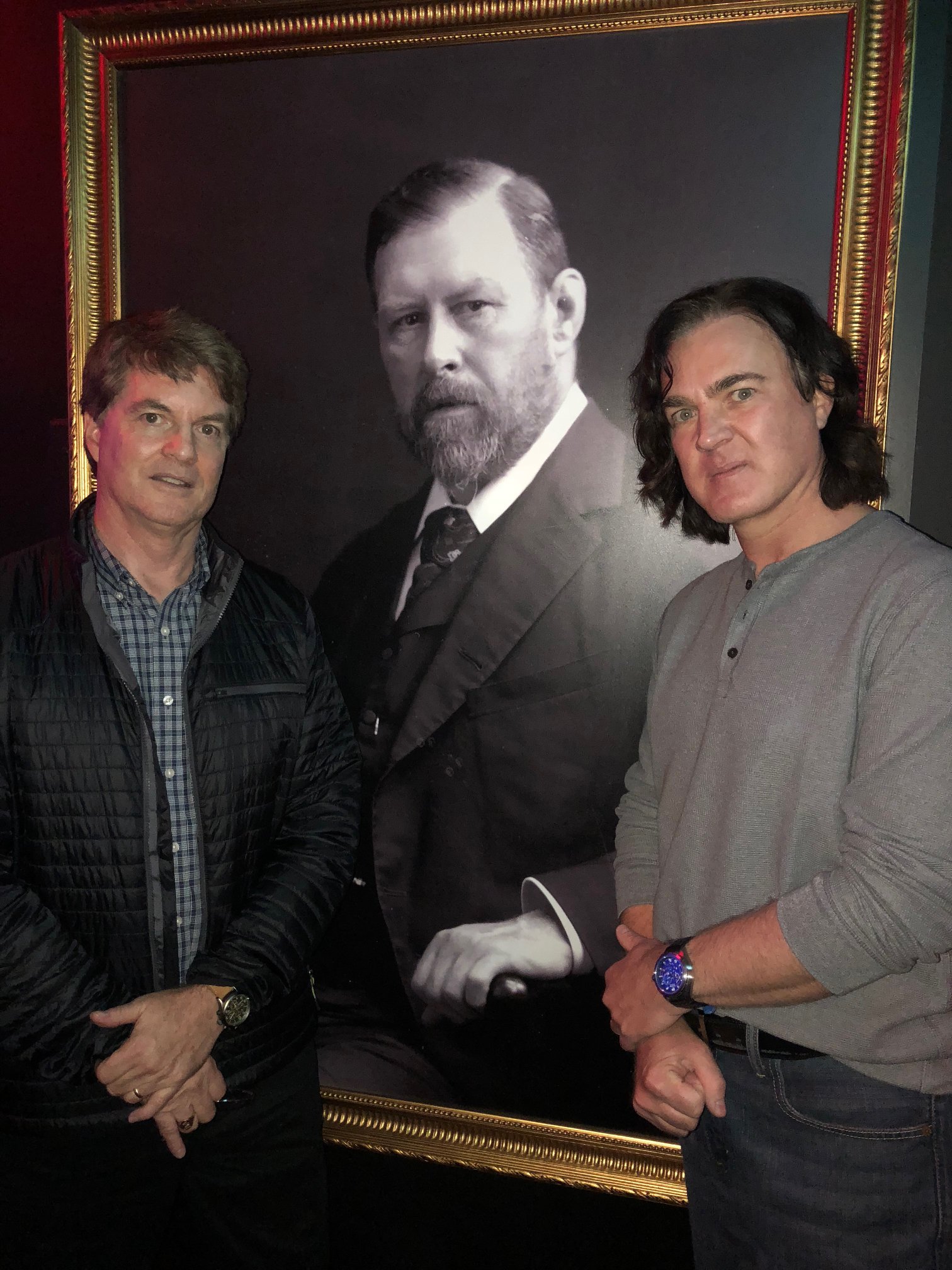
Dacre Stoker with co-author J.D. Barker
I’ve had the pleasure of attending one of Dacre Stoker’s presentations on Bram, so it doesn’t surprise me that Dracul contains rich and accurate descriptions of the Stoker family members, their home and its surroundings. What I didn’t expect was an engaging mystery, which Bram and his siblings unravel, gradually learning Ellen’s true identity and motivations. One of the great delights of the book comes when we finally hear Ellen Crone’s back story, a tale within a tale that has the flavor of an Irish folktale. Plus, at the heart of the novel—and you’ll find this turns out to be literal—there is a grand love story that spans centuries. (And nope, it’s not Drac pining for a reincarnation of his lost love).
The book is faithful to Dracula, even borrowing the epistolary format much of the story told through the interwoven journals and letters of Bram and his siblings. A challenge of this approach is to make each character’s voice distinct. I’m not sure the authors entirely pull that off, but the writing is lovely, in the gothic style of the era in which the novel is set.
Whitby Abbey, on the Yorkshire coast, is a setting for a critical scene in Dracul.
The supernatural rules line up with vampire lore established in popular culture, yet the authors avoid the usual tropes. Startling visuals help the story feel fresh, for example, when Ellen descends deep into a bog under the moonlight or when a heart in a lab jar abruptly starts beating. Often, we’re baffled as to what is going on—in a good way. We have the same sense that we are dealing with the unfamiliar as did the earliest readers of Dracula. (“He’s scuttling down the castle wall like a spider? What the bloody hell?”) The authors also draw upon esoteric vampire lore that rarely shows up in movies. Most notably, the folkloric belief that suicides may return from the grave as vampires is put to good use.
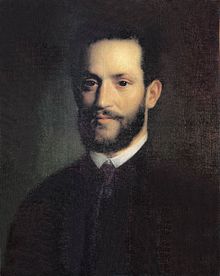
Arminius Vambery is the “Van Helsing” of Dracul.
Bram and his siblings are aided by a seasoned supernatural sleuth, a worthy predecessor to Dr. Van Helsing yet a quite different type of man. The authors made the inspired choice of recruiting a real-life figure, Arminius Vámbéry, a Hungarian traveler, Turkologist and dabbler in the occult. A far cry from the priestly old Dr. Van Helsing, he is a member of the notorious Hellfire Club, a seeker of sensation and forbidden knowledge, not unlike Dorian Gray in TV’s Penny Dreadful. A man who has seen and done too many things.
World-traveler Vambery dons a Dervish outfit for one of his adventures.
Dacre Stoker’s previously co-authoredDracula: The Un-Dead, a sequel to Dracula. Though a highly entertaining novel, it was not as true to Bram’s creation as the current work. It presented Dracula as he likely saw himself: a romantic, misunderstood Byronic figure not unlike the dreamy hunk Frank Langella played in the 1979 movie.
In Dracul, this IS your great-granduncle’s Dracula. I believe that if Vlad the Impaler really were vampirized this is what he would be like: monstrously cruel and tyrannical. He is even more of a badass than in the original novel, inflicting a form of torture on one character that can only be described as epic. In Dracula, Bram only vaguely alludes to the historical 15th century Vlad Tepes, and we never learn exactly how Vlad went from warlord to vampire. In Dracul, the authors connect the dots in a plausible way.
Take-no-prisoners warlord Vlad the Impaler
Vampire fans will be thrilled by the many Easter eggs, such as scenes set at Whitby Abbey, a locale that featured prominently in Dracula. There is a cameo appearance by Joseph Sheridan Le Fanu, author of the classic vampire tale Carmilla. The climax of the novel takes place in a “city of the dead” in Germany populated entirely by vampires. Presumably this was inspired by the vampiric ghost town in Carl Theodor Dreyer’s 1932 German-language film Vampyr. (That movie, every bit as creepy as the silent film Nosferatu, was based on a story by Le Fanu, by the way.)
All in all, I give Dracul an enthusiastic five-stake rating.
THE final showdown in Dracul takes place in a city of the dead similar to the one in the 1932 film Vampyr.
Vampires run amok in a women’s prison in the gorgeously illustrated graphic novel Night Cage. When a newly made vampire is sentenced to an escape-proof, underground slammer, she stealthily begins to spread the contagion.
C. Michael Forsyth is the author of "Sir Arthur Conan Doyle & Harry Houdini in The Adventure of the Spook House,""The Blood of Titans," "Hour of the Beast" and "The Identity Thief." He is a Yale graduate and former senior writer for The Weekly World News

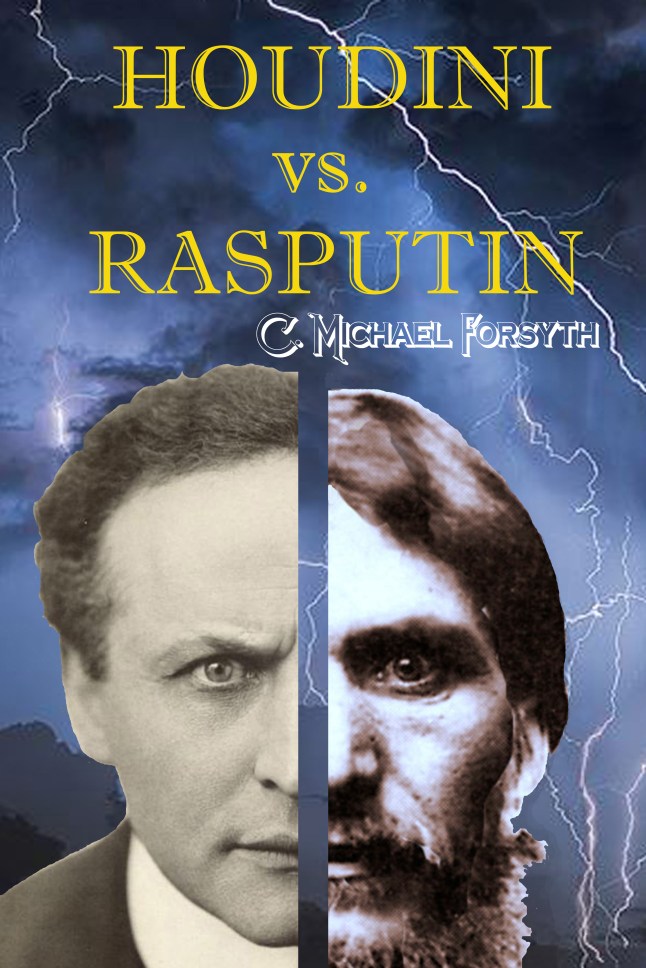 Two of the most extraordinary men who ever lived clash in the thrilling novel Houdini vs. Rasputin, set in Tsarist Russia. While performing before Tsar Nicholas II, the world’s greatest escape artist Harry Houdini becomes pitted against a formidable foe: Rasputin, the powerful and sinister mystic. Rasputin has made puppets of the Tsar and his wife Alexandra. To save the nation from ruin, a small band of patriots recruits Houdini to expose the imperial “spiritual advisor” as a charlatan. Houdini wages an epic battle of wits and wills with the charismatic fiend.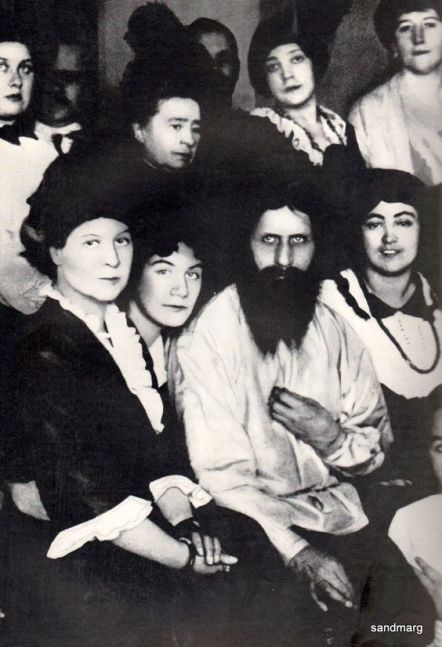

 By
By 



 Horror News