Pedophiles now want to be known by a less-threatening new name: Ctrl-P.
“The term pedophile has a very negative connotation that made it difficult to recruit or even have a civilized discussion on issues like age-of-consent laws,” explained an activist who runs a Ctrl-P website. “If instead you say you want to hold a meeting of Ctrl-P enthusiasts at the local library, you get a much warmer reception.”
Ctrl-P leaders say they were inspired by white nationalists who adopted the innocuous term “alt-right.” Several other groups that have been maligned or misunderstood in the past have also turned to the computer keyboard for fresh names.
Here are some other trendy new terms and what they mean:
It’s important for average Americans to be familiar with these terms, says Carrie Yvostoli, who serves as a new-word editor for a dictionary publisher.
“If Johnny comes home from Little League practice saying the new coach is Ctrl-P, you need to yank him from the program – yesterday.”
Copyright C. Michael Forsyth
If you enjoyed this srticle, check out C. Michael Forsyth’s collection of news satire, available on Kindle and in other eBook formats.
NEW YORK CITY — To safeguard the delicate feelings of conservative politicians, theater groups are now prefacing plays with “trigger warnings” if there are themes involving social justice.
The precautions are being taken out of concern that leaders may suffer serious emotional harm – or even a full-blown panic attack — if exposed to controversial subjects such as freedom of speech, race relations, poverty, or gay rights.
“The last thing you’d want to see is the Attorney General fleeing up the aisle wild-eyed and gasping for breath midway through a stage production of ‘To Kill a Mockingbird,’” explained veteran Broadway stage manager Diane Lentowsky. “Everyone understands why panic in a crowded theater is dangerous. And even grunts of discomfort or audible sobbing can distract the performers and fellow theater goers.”
The move was sparked when cast members of the hit Broadway show “Hamilton” told incoming Vice President Mike Pence during their curtain call that they were concerned that the new administration might not protect the rights of Americans and hoped “this show has inspired you to uphold our American values and work on behalf of all of us.”
President-Elect Donald Trump, furious that the incident might have embarrassed and upset the new Veep, went on Twitter to demand an apology.
“The Theater must always be a safe and special place,” Trump tweeted. “The cast of ‘Hamilton’ was very rude last night to a very good man, Mike Pence. Apologize!”
Chastened theater companies took his words to heart.
“Mr. Trump is 100 % right,” acknowledged Lentowsky. “The theater is supposed to be a safe space, where an audience member’s personal values are never challenged and they aren’t exposed to ideas that make them uncomfortable, or god forbid trigger some kind of emotional collapse.
“You wouldn’t, for example, want a congressman who’s just passed a transgender bathroom bill be subjected to ‘Angels in America,’ the marathon seven-hour play about gays and AIDS!”
Political subtext of “The Crucible” might rattle some officials.
The warnings, printed on playbills or made in verbal announcements just before the curtains rise, give politicians a chance to make a hasty exit. Some theaters are posting the warnings on websites where tickets are sold, so officials can avoid attending offensive plays in the first place.
There won’t be trigger warnings before all plays. Some, like a revival of the beloved musical “The Music Man” would be deemed safe after a careful review of all the dialogue. But a play like “The World of Suzy Wong,” about an interracial relationship, or “The Crucible,” seen as an allegory for the anti-communist witch-hunts of the 1950s, would be proceeded by a heads up.
“We’ll be putting on ‘The Sound of Music,’ which might seem innocuous, but we plan to post a trigger warning just in case, because in it the Von Trapp family must flee a totalitarian government,” Lentowsky said.
“The Sound of Music” might seem harmless, but the singing family’s run-in with the Nazis could have a triggering effect.
Copyright C. Michael Forsyth
If you enjoyed this srticle, check out C. Michael Forsyth’s collection of news satire, available on Kindle and in other eBook formats.
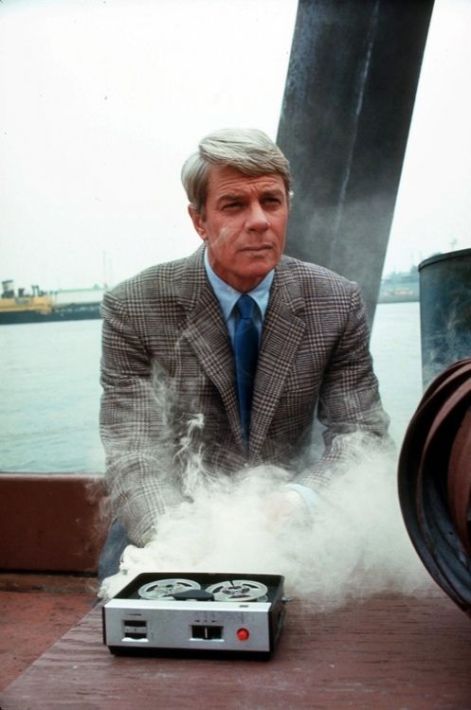
WASHINGTON — In the wake of the Hillary Clinton email scandal, State Department officials are returning to a tried-and-true method for sending sensitive messages securely: audiotapes that self-destruct!
“Emails are just too easy to hack, whether they’re stored on a private server or a government one,” revealed a State Dept. insider, speaking on the condition of anonymity. “We’ve decided to go old school.”
Fans of TV’s Mission: Impossible will remember how spy master Jim Phelps received each assignment on an audiotape, followed by the warning, “As always, should you or any of your I.M. Force be caught or killed, the Secretary will disavow any knowledge of your actions. This tape will self-destruct in five seconds.”
The insider explained, “Unlike the emails of today, back then no one could dig up proof that a Secretary of State or the President authorized the overthrow of a brutal dictator.”
While Hillary Clinton’s use of a private email server got her in hot water, hackers believed to be working for the Russian government subsequently hacked the State Department’s own email system, in what intelligence officials called the “worst ever” cyberattack intrusion against a federal agency.
“That forced us to think outside the box and take a fresh look at older forms of communication such as telephone calls,” said the insider. “We developing a system that operates on an entirely different frequency from cell networks, to prevent signals from being intercepted. The technical details are classified, but it’s not unlike those pen phone communicators used by the agents on Man From U.N.C.L.E.“
To foil enemy agents, State Department officials may even resort to the most low-tech form of communication imaginable: meeting face to face on a park bench and trading information while sipping Starbucks coffee.
However, not everyone in the agency is excited about the throwback to antiquated technology.
Said one disgruntled official, “What’s next, shoe phones?”
On Man From U.N.C.L.E., Illya Kuryakin (David McCallum) could contact his boss securely using a communicator disguised as a pen.
Copyright C. Michael Forsyth
If you enjoyed this satirical article, check out the author’s collection of news parody, available on Kindle and in other eBook formats.
CAMBRIDGE, Mass. — University researchers have identified “sub-microaggressions” — insults so infinitesimal that they are beneath the level of conscious awareness of the person being snubbed, and can be detected only with highly sophisticated new voice analysis software.
“This astonishing scientific breakthrough is on a par with the discovery of the God Particle,” declares science writer Gordon K. Jowski. “Until now, the existence of sub-microaggressions, also known as nanoaggressions, was purely theoretical. Now we have proof.”
Under laboratory conditions, using highly sensitive microphones, a subject was recorded making the statement, “I totally support marriage equality.”
“Advanced software picked up micro-tremors indicating that the speaker was insincere,” reveals Jowski. “The system can also identify sarcasm too subtle for a victim to recognize.”
MICROAGRESSION: Lesbians may take offense at an innocent question like this.
Ordinary microaggressions, first identified by Harvard and MIT experts in the early 1970s, are minor slights, usually uttered by well-meaning persons, that unintentionally communicate hostility toward people based on ethnicity, gender, sexual orientation or gender identity.
For example, telling a female colleague, “I love your shoes,” sends the message that you value her appearance more than her intellect. Saying, “I’m totally OCD about my desk,” trivializes the life experience of people who genuinely suffer from mental illness. Asking an Asian coworker after lunch, “Can you figure out the tip?” perpetuates the stereotype that all Asians are good at math. “Stand and be recognized” marginalizes people who are physically challenged.
“With microaggressions, the listener takes some degree of offense,” explains Jowski. “Sub-microaggression theory holds that sometimes the victim doesn’t pick up on a shift of tone or emphasis that communicates hostility – although he or she might subconsciously suffer psychological harm.”
The software analyzes soundwaves using psychoacoustic modeling, the science behind how humans distinguish and understand the meaning of sounds. Underlying emotions such as fear or resentment are revealed in a printout.
“It’s similar to Voice Stress Analysis (VSA), in how it measures psychophysiological responses, but far more advanced,” according to Jowski. “It’s based on technology originally developed by the NSA to scour overseas communications for possible terrorist threats. Now it can be adapted to help make America’s college campuses and office buildings safe spaces.”
The research team, from four top universities, made no specific recommendations for making practical use of the discovery, but some experts in the field believe microphones and computers equipped with the software should be installed in workplaces and colleges across the country.
“Microaggressions require a macro response,” declares Lauryn Coltbloom, a diversity consultant. “They are actually more damaging than overt expressions of bigotry precisely because they are small and therefore often downplayed, leading the victim to feel self-doubt rather than respond. Obviously, since nanoaggressions are 10 times more insignificant, society must put 10 times the effort into stamping them out.”
Copyright C. Michael Forsyth
If you enjoyed this news satire by C. Michael Forsyth check out his collection of bizarre news stories, available on Kindle and in other eBook formats.
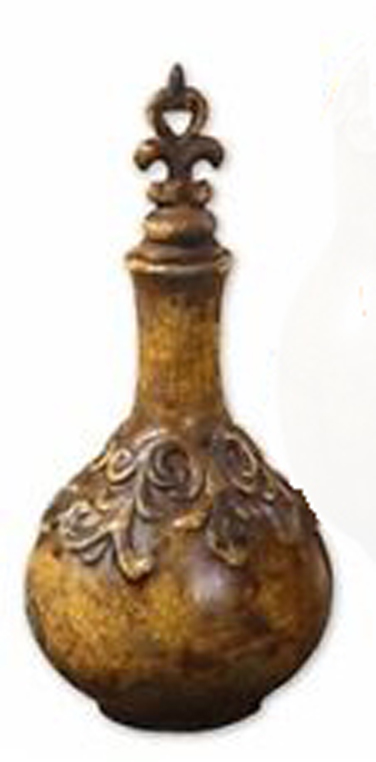
BOTTOMS UP? Would YOU have the guts to guzzle Dracula blood from this bottle?
In what critics have branded “the most reckless scientific undertaking in half a century,” three maverick researchers are preparing to drink the blood of Vlad the Impaler – the historical Dracula.
If all goes well, the trio will prove once and for all that Vlad was no vampire – but if it fails, experts fear the trio could become vampires themselves.
“This so-called experiment is shockingly arrogant and foolhardy,” blasts Romanian folklorist Costica Popescu. “The risk is not only to them. They could unleash a vampire plague that sweeps through the entire region in a matter of weeks.”
But German researchers Albrecht Holtzmann, 54. Leopold Koertig, 44, and Johanna Eichelberger, 37, insist that nothing could go wrong.
“We are taking every conceivable precaution,” Holtzmann assured reporters. “We will be properly restrained and security staff will be on hand, equipped with crucifixes and holy water in the unlikely event that something extraordinary occurs.
“If we’re right, we’ll prove to the world that Dracula was not a vampire, clearing his name. But if we’re wrong, the scientific community will have a unique opportunity to examine these mysterious, marvelous creatures the world knows as vampires.”
The strange scientific saga began in 2002 when a small bottle sealed with wax and labeled “Blood of Vlad Dracul-a of Wallachia” was discovered beneath the ruins of a deconsecrated church in Romania. The site – just 35 miles from Castle Poenari, the legendary stronghold of the 15th century warlord — was being excavated by archaeologists. DNA tests conducted on the contents in 2018 and compared to living descendants of Prince Vlad found an 87% chance the blood was indeed that of the notoriously brutal ruler.
“It was all very puzzling,” explains science writer Hans Fruehaul. “The vast majority of historians say that Vlad, while widely described as ‘bloodthirsty’ in texts from his time, did not literally drink blood. It is generally believed that Bram Stoker, the author of the famous novel Dracula, merely borrowed the name and background of the historical figure for his book. But there are a handful of experts who disagree, insisting that Prince Vlad was a bona fide vampire. And the fact that the bottle of his blood was found at a site known to be a gathering place for devil-worshippers in the late Middle Ages did give some credence to that assertion.”
BLOODTHIRSTY 15th century warlord Vlad the Impaler.
Controversy arose when the German lab where the genetic testing was conducted refused to return the blood, instead transferring it to a vial where it has remained stored in a refrigerated compartment for the past seven years. When Holtzmann, the lab’s director, announced on October 17 his team’s plan to sip the blood, he was met with a firestorm of criticism. There have even been calls for the government to put an evacuation plan in place for the area in the event that things go awry.
But the researchers have adopted a lighthearted — some say frivolous — attitude to the risky venture. They plan to take sips of the blood exactly on midnight on December 1, believed to be the anniversary of Vlad’s birth.
Said Holtzmann, “We will either open our eyes normal and pop open a bottle of champagne, or awake as new beings with remarkable powers and characteristics to discover.”
RESEARCHERS plan to take the title of this Christopher Lee movie literally.
The tables turn on an identity thief in the latest thriller by C. Michael Forsyth. To check it out, click HERE.
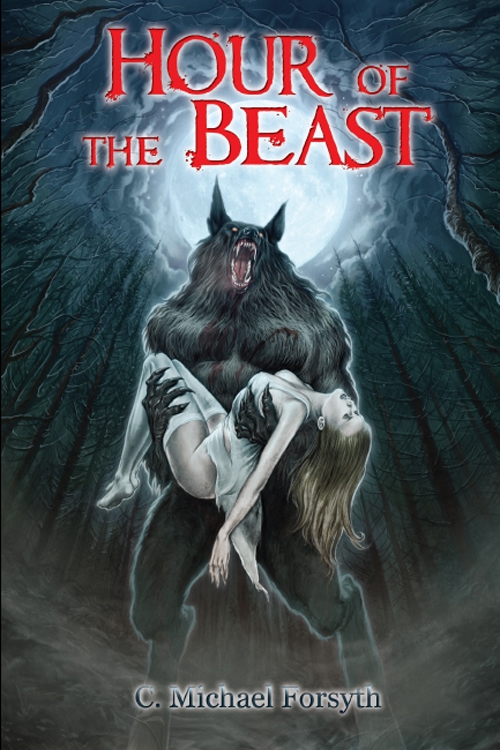
In Hour of the Beast, a young bride is raped by a werewolf on her wedding night. When her sons grow up and head to college, things REALLY get out of hand.
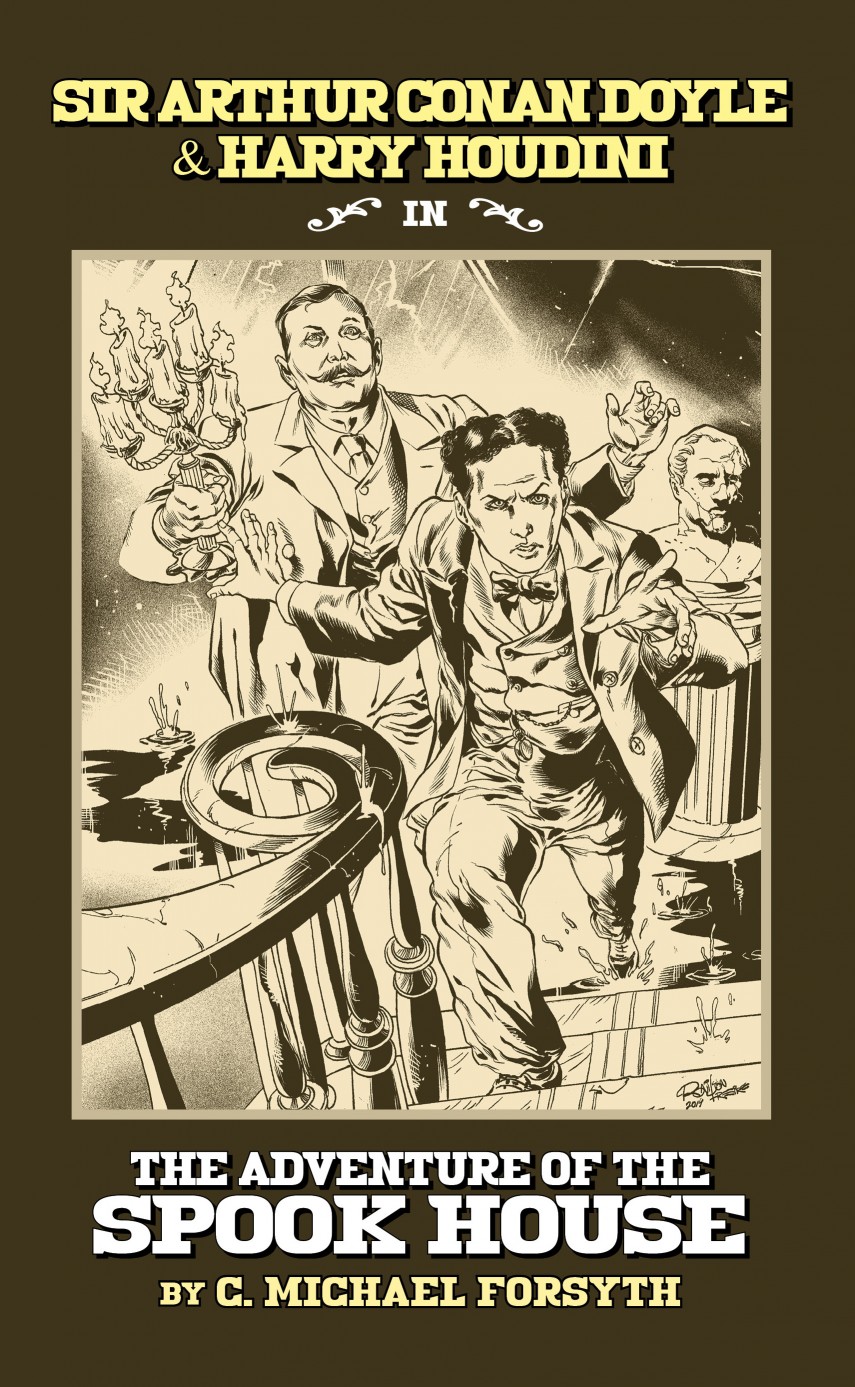
C. Michael Forsyth is the author of "Sir Arthur Conan Doyle & Harry Houdini in The Adventure of the Spook House,""The Blood of Titans," "Hour of the Beast" and "The Identity Thief." He is a Yale graduate and former senior writer for The Weekly World News


 .
.









 Horror News